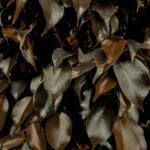
Fin août, les tiges semi-aoûtées du romarin sont assez fermes pour être manipulées sans être déjà trop ligneuses. Avec un rameau de 10 à 15 cm, un substrat drainant et une humidité mesurée, on peut obtenir un jeune plant en quelques semaines. Le piège reste le même : croire que plus d’eau signifie plus de racines.
Le bouturage reprend les caractéristiques du pied mère : son port, son parfum et son adaptation aux conditions où il pousse. Cette multiplication végétative demande aussi de choisir une plante saine, car une bouture peut transmettre certains défauts ou problèmes sanitaires. On a toutes et tous déjà vu un romarin fatigué survivre tant bien que mal. Le multiplier à l’identique, ce serait surtout prolonger la galère.
La formation des racines suit plusieurs étapes. Une étude publiée en 2015 dans BMC Genomicsconsacrée aux boutures d’œillet, a suivi les changements moléculaires, histologiques et physiologiques associés aux racines adventives. L’œillet n’est pas le romarin, mais l’étude rappelle un point pratique : une bouture a besoin de temps, d’oxygène et d’une humidité stable.
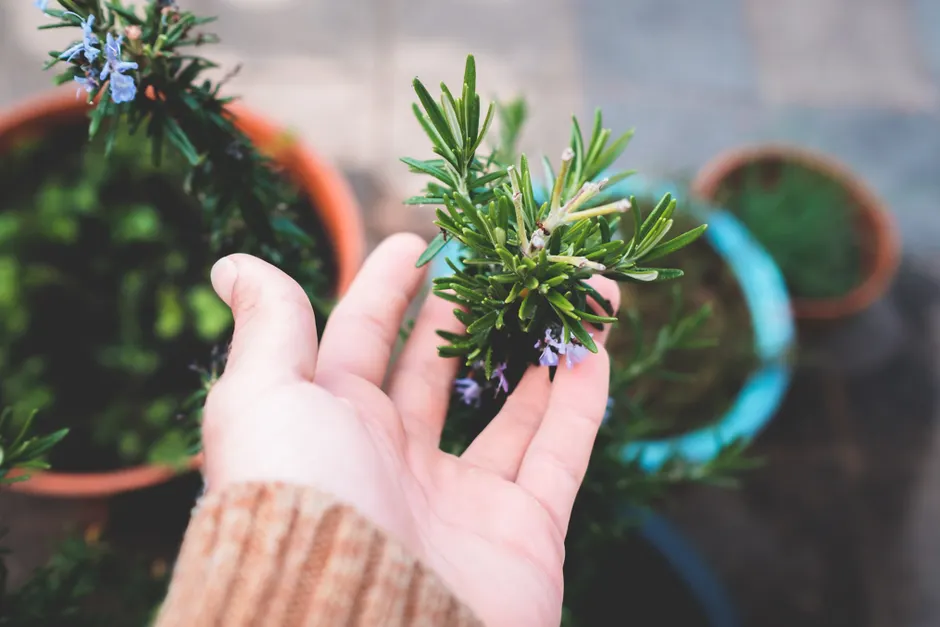
Fin août, le romarin passe en mode bouture
Photo de Ahmet Koç sur Unsplash.
Deux fenêtres sont généralement utilisées pour le bouturage. Au printemps, entre mars et avrilon prélève de jeunes pousses après la floraison. De la fin août au début septembre, les tiges de l’année commencent à se lignifier sans être complètement dures. Cette phase semi-aoûtée offre un compromis pratique : la tige résiste mieux aux manipulations qu’une pousse très tendre tout en conservant une capacité d’enracinement.
Pour reconnaître le bon rameau, pliez-le légèrement. Il doit fléchir sans casser net. Écartez les extrémités molles, les tiges tachées ou les rameaux déjà très ligneux. Prélevez de préférence le matin, avant que la chaleur n’ait accentué la perte d’eau. Une tige trop longue se dessèche davantage avant l’apparition des racines.
La bonne période aide, mais le choix du rameau et la gestion de l’humidité décident ensuite de la suite.
Sept gestes pour que la bouture ne parte pas en vrille
Photo de Julian Hochgesang sur Unsplash.
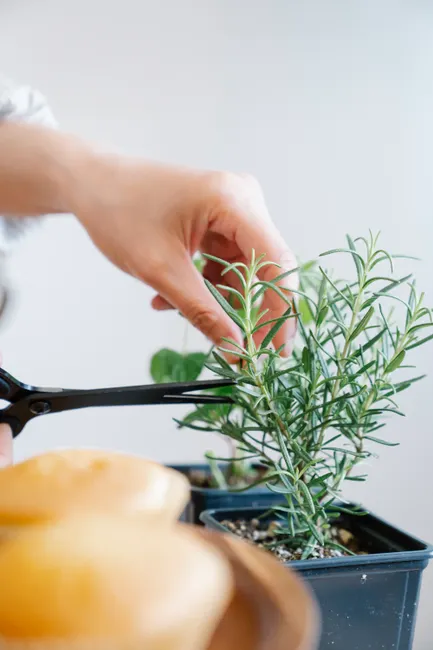
Prélever une tige de 10 à 15 cm. Choisissez une pousse saine de l’année, semi-aoûtée à la fin de l’été. Prélevez plusieurs rameaux plutôt qu’un seul : la multiplication végétative reste une affaire de probabilités, pas de magie.
Faire une coupe propre. Utilisez un sécateur propre et bien affûté. Retaillez la base juste sous un nœud, au point où les feuilles étaient attachées. Une coupe écrasée ou déchirée cicatrise mal et retient facilement l’humidité.
Dénuder la partie enterrée. Retirez les feuilles sur environ 5 cm à la base. Aucune feuille ne doit se retrouver dans le substrat, car elle se décomposerait et pourrait favoriser la pourriture. Supprimez aussi les fleurs ou les boutons encore présents.
Préparer un mélange qui respire. Mélangez à parts égales du terreau pour semis et du sable. Remplissez un godet ou un pot percé, puis humidifiez le substrat avant de planter. Le mélange doit être mouillé au toucher, pas transformé en pâte.
Planter la moitié de la bouture. Faites un trou avec un crayon ou une baguette pour ne pas arracher l’écorce. Enfoncez la partie dénudée sur environ 5 cm, ramenez le substrat contre la tige et tassez doucement. La poudre d’hormone n’est pas une étape obligatoire de cette méthode.
Installer une cloche sans cuire le rameau. Une bouteille transparente coupée ou un sac plastique maintenu par des tuteurs conserve une atmosphère humide. Placez le pot à la lumière, mais à l’abri du soleil direct. Une mini-serre en plein sud, c’est le sauna du romarin et la galère assurée.
Surveiller sans arroser à l’aveugle. Touchez régulièrement le substrat. Arrosez légèrement lorsqu’il commence à sécher, puis laissez l’excédent s’écouler. Quand la tige reste ferme et montre une légère résistance, aérez progressivement la cloche au lieu de la retirer d’un coup.
À l’eau ou en terre, le vrai match se joue au repiquage
Photo de Felicity Tai sur Pexels.
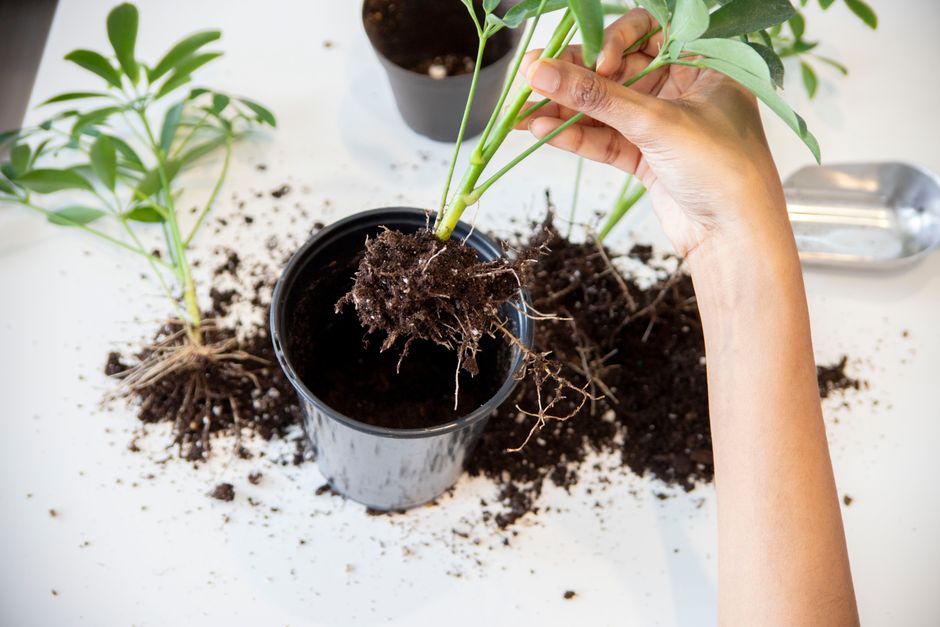
Le bouturage dans l’eau permet de suivre l’apparition des racines. Placez la partie dénudée dans 5 à 7 cm d’eau, sans immerger les feuilles, puis installez le verre dans un endroit lumineux sans soleil direct. Renouvelez l’eau régulièrement et changez-la dès qu’elle se trouble. Les premières racines peuvent apparaître après trois à quatre semaines, mais elles restent fragiles lors du transfert.
Pour passer de l’eau au terreau, attendez des racines blanches de quelques centimètres. Préparez un mélange à parts égales de terreau et de sable, puis plantez sans tirer sur les radicelles. Gardez le substrat légèrement humide pendant le premier mois. La plantation directe dans un mélange drainant évite cette transplantation, ce qui explique pourquoi je la préfère pour le romarin.
Trois à huit semaines, la racine mène l’enquête
Photo de Zé Maria sur Unsplash.
Une reprise visible après trois ou quatre semaines ne prouve pas que le système racinaire est solide. Les réserves de la tige peuvent soutenir une nouvelle pousse avant que les racines soient assez nombreuses. Comptez plutôt six à huit semaines avant un rempotage ou une plantation prudente. La température, la lumière, l’état du rameau et l’humidité du mélange font varier ce délai.
Une étude publiée en 2021 dans Tropical Life Sciences Researchconsacrée aux boutures de Hoya imperialis et de Hoya coronariaa observé un enracinement sans traitement hormonal chez ces deux espèces dans les conditions testées. Certains dosages amélioraient toutefois des indicateurs propres à l’expérience. Ce résultat ne fournit ni taux ni recette pour le romarin : la poudre n’est pas une assurance tous risques.
Après l’enracinement, rempotez dans un contenant légèrement plus grand avec une terre qui évacue bien l’eau. Acclimatez progressivement le plant à l’extérieur, puis installez-le au soleil dans un sol drainé. Dans les régions froides, garder le jeune romarin en pot, dans un local clair et hors gel, évite de lui faire passer son premier test météo en pleine face.
Le sol tranche, même quand la bouture semble gagnée
Photo de Syh sur Unsplash.
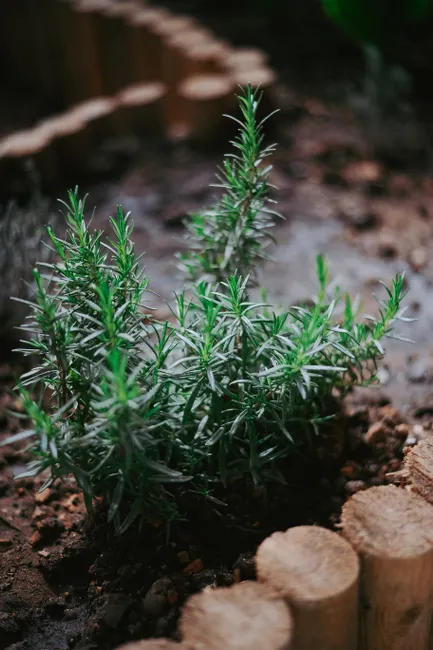
Le romarin adulte apprécie un sol qui évacue rapidement l’eau et sèche entre deux arrosages. En terrain lourd ou humide, installez-le sur une petite butte ou choisissez un emplacement où l’eau ne stagne pas. Après la reprise, les arrosages restent modérés : le jeune plant doit s’adapter progressivement aux conditions plus sèches qui conviennent à l’espèce.
Une revue publiée en 2022 dans Plantsintitulée Clonal Propagation of Walnutsrecense chez le noyer plusieurs facteurs qui font varier la réussite des multiplications végétatives : le génotype, l’âge et l’état physiologique de la plante mère, la période de prélèvement et la préparation des rameaux. Cette revue ne donne pas de règle de calcul pour le romarin, mais elle remet les promesses trop nettes à leur place. Le calendrier donne une chance, pas un contrat signé.
Multiplier un seul pied conserve ses caractères, mais n’augmente pas la diversité génétique du jardin. Si la plante mère est mal adaptée ou déjà affaiblie, on risque donc de reproduire le problème avec méthode. Trois boutures prennent, deux déclinent : ce n’est pas un échec monumental. C’est simplement le romarin qui négocie sévère avec la météo, comme d’habitude.
Sources et références scientifiques
Impact of Auxins on Vegetative Propagation through Stem Cuttings of Couroupita guianensis Aubl.: A Conservation Approach – PMC. Scientifica. DOI: 10.1155/2016/6587571 · PMID: 28083155.
1.Lim T. K. Edible Medicinal and Non Medicinal Plants Fruits. Berlin, Germany: Springer; 2012. Couroupita guianensis. [Google Scholar].
2.Mitre M. IUCN Red List of Threatened Species. Version 2012.2. 2012. Couroupita guianensis. [Google Scholar].
3.Rai Y. Early seedling growth status of threatened medicinal tree species Couroupita guianensis Aubl. in District Meerut, (U.P.) India. International Journal of Innovation and Scientific Research. 2014;8(2):252-255. [Google Scholar].
4.Sai K. C., Gaddala N., Vanamala S., Naresh V., Elumalai A. A short review on therapeutic uses of Couroupita guianensis Aubl. International Research Journal of Pharmaceutical and Applied Sciences. 2011;1(1):105-108. [Google Scholar].
5.Sundararajan R., Koduru R. A complete profile on Couroupita guianensis-traditional uses, pharmacological activities and phytoconstituents. Pharmacophore. 2014;5(1):147-159. [Google Scholar].
6.Manimegalai S., Rakkimuthu G. Phytochemical screening of stem of Couroupita guianensis. International Journal of Pharmaceutical Sciences and Research. 2012;3(11):4434-4437. [Google Scholar].
7.Shete S. A., Shah G. N., Walke S. S., Patil V. S., Patil K. D., Killedar S. G. Standardization and anti bacterial activity of Couroupita guianensis fruit shell extract. International Journal of Biology. 2013;2(1):360-364. [Google Scholar].
8.Swapnalatha S., Rajeswari V. D. Antidiabetic activity of couroupita guianensis, a review. IOSR Journal of Pharmacy and Biological Sciences. 2014;9(3):41-43. doi: 10.9790/3008-09334143. [DOI] [Google Scholar]. doi:10.9790/3008-09334143.
9.Gupta V. H., Juvekar A. R. Antistress and antioxidant activity of flower of Couroupita guianensis in rats. An International Journal of Advances in Pharmaceutical Sciences. 2013;4(1):76-83. [Google Scholar].
10.Bhuvaneswari S., Deepa S., Sripriya N., Prameela L., Udaya Prakash N. K. Antioxidant activity and phytochemistry of various flowers from Tamil Nadu, India. International Journal of Research in Pharmaceutical Sciences. 2014;5(1):40-45. [Google Scholar].
11.Umachigi S. P., Jayaveera K. N., Ashok Kumar C. K., Kumar G. S. Antimicrobial, wound healing and antioxidant potential of Couroupita guianensis in rats. Pharmacology Online. 2007;3(1):269-281. [Google Scholar].
12.Pradhan D., Panda P. K., Tripathy G. Evaluation of the immunomodulatory activity of the methanolic extract of Couroupita guianensis aubl. flowers in rats. Natural Product Radiance. 2009;8(1):37-42. [Google Scholar].
Vegetative Propagation of Hoya imperialis and Hoya coronaria by Stem Cutting and Micropropagation – PMC. Tropical life sciences research. DOI: 10.21315/tlsr2021.32.3.1 · PMID: 35656369.
Abidin N, Metali F. Effects of different types and concentrations of auxins on juvenile stem cuttings for propagation of potential medicinal Dillenia suffruticosa (Griff. Ex. Hook. F. and Thomson) Martelli shrub. Research Journal of Botany. 2015;10(3):73-87. doi: 10.3923/rjb.2015.73.87. [DOI] [Google Scholar]. doi:10.3923/rjb.2015.73.87.
Akat H, Demirkan GC, Tuna AL. The effect of naphthalene acetic acid and some rooting media on rooting abilities and shoot growth of dwarf Nerium cuttings. Journal of Environmental Biology. 2017;38:903-909. doi: 10.22438/jeb/38/5(SI)/GM-05. [DOI] [Google Scholar]. doi:10.22438/jeb/38/5(SI)/GM-05.
Al-Mizory HSF. Effect of planting dates and different concentrations of indole butyric acid (IBA) on the cutting rooting of Carissa grandiflora. Mesopotamia Journal of Agriculture. 2006;34(4):38-48. doi: 10.33899/magrj.2006.26439. [DOI] [Google Scholar]. doi:10.33899/magrj.2006.26439.
Ambasta SP, Wickens GE. The useful plants of India. India: Publication and Information Directorate, Council of Scientific and Industrial Research; 1988. [DOI] [Google Scholar].
Aminah H, Hasnita RMN, Hamzah M. Effects of indole butyric acid concentrations and media on rooting of leafy stem cuttings of Shorea parvifolia and Shorea macroptera. Journal of Tropical Forest Science. 2006;18(1):1-7. [Google Scholar].
Awang Kamis NDZ, Taha H, Metali F. Effects of commercial plant hormones on the survival, rooting and growth of stem cuttings of an herbal tea plant, Aidia racemosa. Research Journal of Medicinal Plants. 2016;10(6-7):414-419. doi: 10.3923/rjmp.2016.414.419. [DOI] [Google Scholar]. doi:10.3923/rjmp.2016.414.419.
Baul TK, Mezbahuddin M, Hossain MM, Mohiuddin M. Vegetative propagation of Holarrhena pubescens, a wild tropical medicinal plant: Effect of indole-3-butyric acid (IBA) on stem cuttings. Forestry Studies in China. 2010;12(4):228-235. doi: 10.1007/s11632-010-0409-3. [DOI] [Google Scholar]. doi:10.1007/s11632-010-0409-3.
Bermuli JE, Sulistijorini, Rahayu S. Population structure of Hoya spp. (Apocynaceae: Asclepiadoideae) at Bodogol Nature Conservation Education Center, Indonesia. Biotropia: The Southeast Asian Journal of Tropical Biology. 2019;26(2):1-17. doi: 10.11598/btb.2019.26.2.881. [DOI] [Google Scholar]. doi:10.11598/btb.2019.26.2.881.
Braun L, Wyse D. Optimizing IBA concentration and stem and segment size for rooting of hybrid hazelnuts from hardwood stem cuttings. Journal of Environmental Horticulture. 2019;37(1):1-8. doi: 10.24266/0738-2898-37.1.1. [DOI] [Google Scholar]. doi:10.24266/0738-2898-37.1.1.
Bujang MC. Vegetative propagation of indigenous timber tree species through cuttings. In: Maruyama A, Padolina CB, Hachinohe H, editors. The symposium on plant and tree propagation. Bandar Seri Begawan, Brunei: 1992. pp. 24-33. [Google Scholar].
Burkill IH. Dictionary of economic product of Malay Peninsula. Malaysia: Ministry of Agriculture; 2002. [Google Scholar].
Cahyadi UA. Undergraduate diss. Bogor Agricultural University; 2005. Effects of the exposure of small pitis leaf extract (Hoya lacunosa) against the development of the pre-adult Culex quinquefasciatus mosquito. [Google Scholar].
Clonal Propagation of Walnuts (Juglans spp.): A Review on Evolution from Traditional Techniques to Application of Biotechnology – PMC. Plants (Basel, Switzerland). DOI: 10.3390/plants11223040 · PMID: 36432769.
1.Vahdati K. Nursery Management and Grafting of Walnut. Khaniran Publisher; Tehran, Iran: 2003. p. 113. [Google Scholar].
2.Hassani D., Sarikhani S., Dastjerdi R., Mahmoudi R., Soleimani A., Vahdati K. Situation and recent trends on cultivation and breeding of Persian walnut in Iran. Sci. Hortic. 2020;270:109369. doi: 10.1016/j.scienta.2020.109369. [DOI] [Google Scholar]. doi:10.1016/j.scienta.2020.109369.
3.Peyghamzadeh K., Kazemi T.S. The effects of BAP, IBA and genotypes on in vitro germination of immature walnut embryos. Int. J. Plant Prod. 2010:309-322. [Google Scholar].
4.Vahdati K., Sarikhani S., Arab M.M., Leslie C.A., Dandekar A.M., Aletà N., Bielsa B., Gradziel T.M., Montesinos Á., Rubio-Cabetas M.J., et al. Advances in rootstock breeding of nut trees: Objectives and strategies. Plants. 2021;10:2234. doi: 10.3390/plants10112234. [DOI] [PMC free article] [PubMed] [Google Scholar]. doi:10.3390/plants10112234.
5.Pijut P.M., Moore M. Early season softwood cuttings effective for vegetative propagation of Juglans cinerea. HortScience. 2002;37:697-700. doi: 10.21273/HORTSCI.37.4.697. [DOI] [Google Scholar]. doi:10.21273/HORTSCI.37.4.697.
6.Liu H., Gao Y., Song X., Ma Q., Zhang J., Pei D. A novel rejuvenation approach to induce endohormones and improve rhizogenesis in mature Juglans tree. Plant Methods. 2018;14:13. doi: 10.1186/s13007-018-0280-0. [DOI] [PMC free article] [PubMed] [Google Scholar]. doi:10.1186/s13007-018-0280-0.
7.Davis T.D., Sankhla N. Effects of shoot growth retardants and inhibitors on adventitious rooting. In: Davis T.D., Haissig B.E., Sankhla N., editors. Adventitious Root Formation in Cuttings. Volume 2. Dioscorides Press; Portland, OR, USA: 1988. pp. 174-184. [Google Scholar].
8.Tajbakhsh M., Korkan M., Ghiyasi M. Effect of timing on callus formation and rooting ability in iba-treated hardwood stem cuttings of Persian walnut, hazelnut and apple. Not. Bot. Horti Agrobot. Cluj-Napoca. 2009;37:103-107. doi: 10.15835/nbha3713104. [DOI] [Google Scholar]. doi:10.15835/nbha3713104.
9.Driver J., Kuniyuki A.H. In vitro propagation of Paradox walnut rootstock. HortScience. 1984;19:507-509. doi: 10.21273/HORTSCI.19.4.507. [DOI] [Google Scholar]. doi:10.21273/HORTSCI.19.4.507.
10.McGranahan G.H., Driver J.A., Tulecke W. Tissue culture of Juglans. In: Bonga J.M., Durzan D.J., editors. Cell and Tissue Culture in Forestry. Volume 24-26. Springer; Dordrecht, The Netherland: 1987. pp. 261-271. Forestry Sciences. [Google Scholar].
11.Gruselle R., Boxus P. Walnut micropropagation. Acta Hortic. 1990;284:45-52. doi: 10.17660/ActaHortic.1990.284.3. [DOI] [Google Scholar]. doi:10.17660/ActaHortic.1990.284.3.
12.Hackett W.P., Leslie C., McGranahan G. Acclimatization of in vitro derived plantlets of walnut rootstock clones. Acta Hortic. 2009;812:427-430. doi: 10.17660/ActaHortic.2009.812.60. [DOI] [Google Scholar]. doi:10.17660/ActaHortic.2009.812.60.
Gene expression profiling during adventitious root formation in carnation stem cuttings – PMC. BMC genomics. DOI: 10.1186/s12864-015-2003-5 · PMID: 26467528.
1.Geiss G, Gutierrez L, Bellini C. Adventitious root formation: New insights and perspectives. In: Beekman T, editor. Root Development. Oxford: Wiley-Blackwell; 2009. p. 376. [Google Scholar].
llini C, Pacurar DI, Perrone I. Adventitious roots and lateral roots: similarities and differences. Annu Rev Plant Biol. 2014;65:639-666. doi: 10.1146/annurev-arplant-050213-035645. [DOI] [PubMed] [Google Scholar]. doi:10.1146/annurev-arplant-050213-035645.
Klerk GJ, Van der Krieken W, de Jong JC. The formation of adventitious roots: new concepts, new possibilities. In Vitro Cell Dev Biol Plant. 1999;35(3):189-199. doi: 10.1007/s11627-999-0076-z. [DOI] [Google Scholar]. doi:10.1007/s11627-999-0076-z.
4.Pacurar DI, Perrone I, Bellini C. Auxin is a central player in the hormone cross-talks that control adventitious rooting. Physiol Plant. 2014;151(1):83-96. doi: 10.1111/ppl.12171. [DOI] [PubMed] [Google Scholar]. doi:10.1111/ppl.12171.
5.Ahkami AH, Melzer M, Ghaffari MR, Pollmann S, Ghorbani Javid M, Shahinnia F, Hajirezaei MR, Druege U. Distribution of indole-3-acetic acid in Petunia hybrida shoot tip cuttings and relationship between auxin transport, carbohydrate metabolism and adventitious root formation. Planta. 2013;238(3):499-517. doi: 10.1007/s00425-013-1907-z. [DOI] [PMC free article] [PubMed] [Google Scholar]. doi:10.1007/s00425-013-1907-z.
6.Garrido G, Guerrero JR, Cano EA, Acosta M, Sánchez-Bravo J. Origin and basipetal transport of the IAA responsible for rooting of carnation cuttings. Physiol Plant. 2002;114(2):303-312. doi: 10.1034/j.1399-3054.2002.1140217.x. [DOI] [PubMed] [Google Scholar]. doi:10.1034/j.1399-3054.2002.1140217.x.
7.Boerjan W, Cervera MT, Delarue M, Beeckman T, Dewitte W, Bellini C, Caboche M, Van Onckelen H, Van Montagu M, Inze D. Superroot, a recessive mutation in Arabidopsis, confers auxin overproduction. Plant Cell. 1995;7(9):1405-1419. doi: 10.1105/tpc.7.9.1405. [DOI] [PMC free article] [PubMed] [Google Scholar]. doi:10.1105/tpc.7.9.1405.
larue M, Prinsen E, Onckelen HV, Caboche M, Bellini C. Sur2 mutations of Arabidopsis thaliana define a new locus involved in the control of auxin homeostasis. Plant J. 1998;14(5):603-611. doi: 10.1046/j.1365-313X.1998.00163.x. [DOI] [PubMed] [Google Scholar]. doi:10.1046/j.1365-313X.1998.00163.x.
9.Zhao Y, Christensen SK, Fankhauser C, Cashman JR, Cohen JD, Weigel D, Chory J. A role for flavin monooxygenase-like enzymes in auxin biosynthesis. Science. 2001;291(5502):306-309. doi: 10.1126/science.291.5502.306. [DOI] [PubMed] [Google Scholar]. doi:10.1126/science.291.5502.306.
10.Rasmussen A, Mason MG, De Cuyper C, Brewer PB, Herold S, Agusti J, Geelen D, Greb T, Goormachtig S, Beeckman T, et al. Strigolactones suppress adventitious rooting in Arabidopsis and pea. Plant Physiol. 2012;158(4):1976-1987. doi: 10.1104/pp.111.187104. [DOI] [PMC free article] [PubMed] [Google Scholar]. doi:10.1104/pp.111.187104.
11.Riefler M, Novak O, Strnad M, Schmulling T. Arabidopsis cytokinin receptor mutants reveal functions in shoot growth, leaf senescence, seed size, germination, root development, and cytokinin metabolism. Plant Cell. 2006;18(1):40-54. doi: 10.1105/tpc.105.037796. [DOI] [PMC free article] [PubMed] [Google Scholar]. doi:10.1105/tpc.105.037796.
12.Werner T, Motyka V, Laucou V, Smets R, Van Onckelen H, Schmulling T. Cytokinin-deficient transgenic Arabidopsis plants show multiple developmental alterations indicating opposite functions of cytokinins in the regulation of shoot and root meristem activity. Plant Cell. 2003;15(11):2532-2550. doi: 10.1105/tpc.014928. [DOI] [PMC free article] [PubMed] [Google Scholar]. doi:10.1105/tpc.014928.
Bruno Nunez. Comment faire des boutures de romarin?. 2016.
Grégory Fontaine. Comment bouturer le romarin pour une culture réussie?. 2012.
Cassandre N.. Bouturer le romarin : guide complet pour multiplier votre plante aromatique. 2025.
Eric est jardinier passionné depuis 22 ans. Il partage régulièrement ses conseils et astuces de jardinage sur son blog "Jardin-Bio", pour aider les débutants comme les jardiniers confirmés à entretenir et faire évoluer leur jardin.