La lavande vraie pousse dans un sol sec et drainé, fleurit autour de juin et attire les pollinisateurs. Le vrai piège? La confondre avec le lavandin ou extrapoler des résultats de laboratoire au jardin.
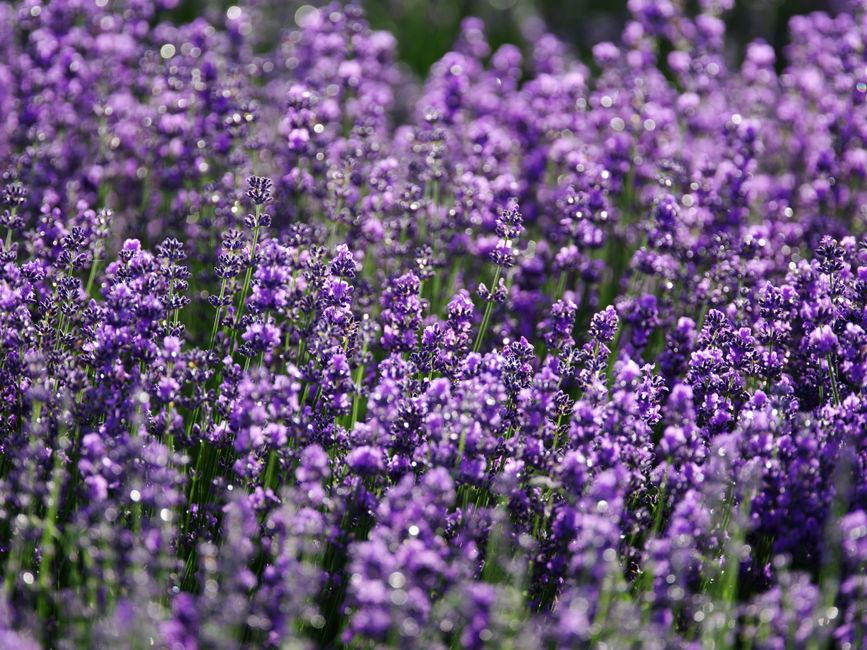
Lavandula angustifoliaaussi appelée lavande officinale, lavande fine ou lavande à feuilles étroites, est un sous-arbrisseau vivace de la famille des Lamiacées. Elle porte des feuilles étroites gris-vert et des épis de fleurs bleu-violet. Dans les faits, son apparente sobriété repose sur un point non négociable: ses racines supportent mal l’humidité stagnante.
Lavande ou lavandin: le parfum du faux jumeau

La lavande vraie n’est pas le lavandin. Ce dernier est un hybride de Lavandula angustifolia et de Lavandula latifolia. Il est généralement plus prolifique et fleurit plus tard, tandis que la lavande vraie est recherchée pour la finesse de son parfum. L’étiquette « lavande » reste donc trop vague si l’on veut choisir une plante pour son port, sa floraison ou son parfum.
Trois lavandes, un sacré tri
La lavande papillon, Lavandula stoechasse reconnaît à ses bractées dressées et fleurit plus tôt, dès le mois de mai. Les trois types attirent les pollinisateurs, mais ils ne présentent ni la même précocité ni le même aspect. Ça négocie sévère avec les étiquettes imprécises en jardinerie.
Pour identifier la lavande vraie, le nom botanique Lavandula angustifolia est le repère le plus fiable.
Sol sec: l’eau n’a pas le dernier mot

La lavande vraie apprécie les terres pauvres, rocailleuses, caillouteuses et calcaires. Elle convient aux terrains secs ou arides, à condition que l’eau ne reste pas bloquée autour des racines. Un sol lourd et humide en hiver lui pose davantage de problèmes qu’une terre peu fertile.
Le sol reste un organisme vivant qu’on nourrit, mais la lavande n’a pas besoin d’un menu chargé. Dans son cas, le drainage passe avant l’enrichissement. Une exposition lumineuse et un terrain qui évacue l’eau correspondent mieux à ses exigences qu’un emplacement constamment humide.
En pot, pas les pieds dans l’eau
La culture en pot est possible si le contenant assure un bon écoulement de l’eau. Le choix du pot ne corrige pas un substrat qui reste détrempé: il faut d’abord offrir aux racines un milieu drainant. Sinon, la plante se retrouve dans une sacrée galère, même sous un soleil généreux.
Juin fait son grand épi
La lavande vraie se couvre d’épis bleu-violet au mois de juin. Ses fleurs nectarifères attirent de nombreux insectes pollinisateurs, ce qui lui donne une place utile dans une bordure sèche ou un massif de plantes aux exigences voisines.
La lavande papillon se distingue par une floraison plus précoce, dès mai. Cette différence de calendrier suffit à éviter une confusion fréquente au moment de l’achat. Autre saison, autre silhouette: la botanique ne se laisse pas emballer dans une étiquette passe-partout.
La plante est aussi aromatique dans son ensemble, avec des fleurs particulièrement parfumées. Cette caractéristique explique ses usages horticoles, aromatiques et médicinaux, mais elle ne rend pas toutes les préparations équivalentes.
Du bouquet au flacon: le grand écart

Une fleur séchée, une infusion, une huile essentielle et un extrait ne correspondent pas à la même matière. L’huile essentielle concentre la fraction volatile de la plante, notamment le linalol et l’acétate de linalyle. Changer de forme change donc aussi la composition et le niveau de concentration.
Une revue publiée dans Food Science & Nutrition en 2025 examine des études cliniques consacrées au potentiel anxiolytique de préparations orales de Lavandula angustifolia. Elle analyse des résultats chez l’être humain; elle ne transforme pas pour autant toutes les préparations de lavande en traitement validé.
Une revue narrative publiée dans Pharmaceutical Biology en 2026 distingue également l’huile essentielle de la biomasse aérienne riche en polyphénols après distillation. L’intérêt étudié pour cette biomasse ne signifie pas qu’un résidu de distillation devient automatiquement un aliment, un cosmétique ou un produit thérapeutique.
Pour un usage médicinal, la forme du produit, sa dose et sa qualité comptent autant que le nom de la plante. Une huile essentielle ne se manipule pas comme une fleur séchée.
Quand la lavande met les racines dans le cambouis

Une étude publiée le 26 mai 2026 dans New Biotechnology a testé la lavande vraie dans des microcosmes contenant des sols historiquement contaminés par plusieurs polluants, dont des métaux lourds et des PCB. Le protocole a suivi quatre traitements pendant 90 jours, dont une association entre la plante et un consortium bactérien de quatre souches.
Dans cette combinaison, l’efficacité d’élimination annoncée atteignait 44,75 % pour le plomb et 66,87 % pour l’étain. Ces chiffres décrivent ce dispositif expérimental précis: ils ne prouvent pas qu’une lavande installée dans un jardin dépolluera seule un sol contaminé.
La recherche rappelle néanmoins un fait utile: les racines, les bactéries et le sol fonctionnent ensemble. La lavande peut participer à un système étudié en laboratoire; elle ne devient pas pour autant un outil domestique de dépollution. Au jardin, le sol sec lui va bien. Les expériences scientifiques, elles, demandent un protocole. Chacun son terrain.
Sources et références scientifiques
- A Comprehensive Review on Anxiolytic Effect of Lavandula Angustifolia Mill. in Clinical Studies – PMC. Food science & nutrition. DOI: 10.1002/fsn3.70993 · PMID: 40994458.
- Abbaszadeh, R., Tabari F., and Asadpour A.. 2020. “The Effect of Lavender Aroma on Anxiety of Patients Having Bone Marrow Biopsy.” Asian Pacific Journal of Cancer Prevention: APJCP 21: 771-775. [DOI] [PMC free article] [PubMed] [Google Scholar].
- Abd Alkhalek, W. M. 2023. “Clinical Evaluation of the Effect of Volatile Oils on Anxiety of Children During Dental Procedures: An In‐Vivo Study.” Dental Journal (Majalah Kedokteran Gigi) 69: 927. [Google Scholar].
- Abduallah, A. M., Ahmed A. E., Bajaber M. A., and Alalwiat A. A.. 2023. “Evaluation of the Antidiabetic Effects of Methanolic Extracts of Neem ( Azadirachta Indica ) Seeds on the Streptozotocin‐Induced Wistar Rats.” Pakistan Veterinary Journal 43, no. 4: 792-798. [Google Scholar].
- Abubakar, A. R., and Haque M.. 2020. “Preparation of Medicinal Plants: Basic Extraction and Fractionation Procedures for Experimental Purposes.” Journal of Pharmacy & Bioallied Sciences 12: 1-10. [DOI] [PMC free article] [PubMed] [Google Scholar].
- Afshar, M. K., Moghadam Z. B., Taghizadeh Z., Bekhradi R., Montazeri A., and Mokhtari P.. 2015. “Lavender Fragrance Essential Oil and the Quality of Sleep in Postpartum Women.” Iranian Red Crescent Medical Journal 17: e25880. [DOI] [PMC free article] [PubMed] [Google Scholar].
- Al‐Saeed, F. A., Bamarni S. S. I., Iqbal K. J., et al. 2023. “In Vitro Anthelmintic Efficacy of Haloxylon salicornicum Leaves Extract Using Adult Heamonchus contortus Worms.” Pakistan Veterinary Journal 43, no. 1: 91-96. 10.29261/pakvetj/2022.091. [DOI] [Google Scholar]. doi:10.29261/pakvetj/2022.091.
- Amini, J., Beyer C., Zendedel A., and Sanadgol N.. 2023. “MAPK Is a Mutual Pathway Targeted by Anxiety‐Related miRNAs, and E2F5 Is a Putative Target for Anxiolytic miRNAs.” Biomolecules 13, no. 544. [DOI] [PMC free article] [PubMed] [Google Scholar].
- Andrei, F., Ersilia A., Tulcan C., and Dragomirescu A.. 2018. “Chemical Composition and the Potential of Lavandula Angustifolia L. Oil as a Skin Depigmentant.” Records of Natural Products 12: 340-349. [Google Scholar].
- Aprotosoaie, A. C., Gille E., Trifan A., Luca V. S., and Miron A.. 2017. “Essential Oils of Lavandula Genus: A Systematic Review of Their Chemistry.” Phytochemistry Reviews 16: 761-799. [Google Scholar].
- Araj‐Khodaei, M., Noorbala A. A., Yarani R., et al. 2020. “A Double‐Blind, Randomized Pilot Study for Comparison of Melissa officinalis L. and Lavandula angustifolia Mill. With Fluoxetine for the Treatment of Depression.” BMC Complementary Medicine and Therapies 20: 207. [DOI] [PMC free article] [PubMed] [Google Scholar].
- Ayik, C., and Özden D.. 2018. “The Effects of Preoperative Aromatherapy Massage on Anxiety and Sleep Quality of Colorectal Surgery Patients: A Randomized Controlled Study.” Complementary Therapies in Medicine 36: 93-99. [DOI] [PubMed] [Google Scholar].
- Bagheri, E., Shori A. B., Peng C. W., Baba A. S., and Alzahrani A. J.. 2024. “Phytochemical Analysis and Medicinal Properties of Some Selected Traditional Medicinal Plants.” International Journal of Agriculture and Biosciences 13, no. 4: 689-700. [Google Scholar].
- Lavandula angustifolia as a dual pharmacological system: from essential oil to polyphenol-rich biomass – PMC. Pharmaceutical biology. DOI: 10.1080/13880209.2026.2679806 · PMID: 42248216.
- Aćimović M, et al. 2026. Green innovation for solid post-distillation residues valorization: narrative review of circular bio-economy solutions. Processes. 14(2):244. 10.3390/pr14020244 [DOI] [Google Scholar]. doi:10.3390/pr14020244.
- Adaszyńska-Skwirzyńska M, Dzięcioł M.. 2017. Comparison of phenolic acids and flavonoids contents in various cultivars and parts of common lavender (Lavandula angustifolia) derived from Poland. Nat Prod Res. 31(21):2575-2580. 10.1080/14786419.2017.1320792 [DOI] [PubMed] [Google Scholar]. doi:10.1080/14786419.2017.1320792.
- Bălașoiu RAC, et al. 2024. Analyzing the antibacterial synergistic interactions of Romanian lavender essential oils via gas chromatography-mass spectrometry: in vitro and in silico approaches. Plants. 13(15):2136. 10.3390/plants13152136 [DOI] [PMC free article] [PubMed] [Google Scholar]. doi:10.3390/plants13152136.
- Barar A, Bensebia O.. 2025. Surfactant assisted extraction for the recovery of bioactive compounds from solid wastes of lavender (Lavandula angustifolia Mill.). Optimization by Box-Behnken design. Process Biochem. 153:170-181. 10.1016/j.procbio.2025.03.013 [DOI] [Google Scholar]. doi:10.1016/j.procbio.2025.03.013.
- Barut M, Tansı S, Karaman S.. 2022. Essential oil composition of lavender (Lavandula angustifolia Mill.) at various plantation ages and growth stages in the Mediterranean region. Turkish JAF SciTech. 10(4):746-753. 10.24925/turjaf.v10i4.746-753.5051 [DOI] [Google Scholar]. doi:10.24925/turjaf.v10i4.746-753.5051.
- Behmanesh F, et al. 2015. Antifungal effect of lavender essential oil (Lavandula angustifolia) and clotrimazole on Candida albicans: an in vitro study. Scientifica. 2015:261397-261395. 10.1155/2015/261397 [DOI] [PMC free article] [PubMed] [Google Scholar]. doi:10.1155/2015/261397.
- Bejar E. 2020. Adulteration of English lavender (Lavandula angustifolia) essential oil. In: Botanical adulterants prevention bulletin. ABC-AHP-NCNPR botanical adulterants prevention program. Austin, TX, USA: American Botanical Council [Google Scholar].
- Belhadj Mostefa M, et al. 2014. Chemotypes investigation of Lavandula essential oils growing at different North African soils. J Mater Environ Sci. 5(6):1896-1901. [Google Scholar].
- Białoń M, Krzyśko-Łupicka T, Nowakowska-Bogdan E, Wieczorek P.. 2019. Chemical composition of two different lavender essential oils and their effect on facial skin microbiota. Molecules. 24(18):3270. 10.3390/molecules24183270 [DOI] [PMC free article] [PubMed] [Google Scholar]. doi:10.3390/molecules24183270.
- Bogatyrova O, et al. 2024. Lavandula angustifolia Mill. of Ukrainian origin: a comparative study of the chemical composition and antimicrobial potential of herb extracts. Sci Rise Pharm Sci. 5(51):4-14. 10.15587/2519-4852.2024.313236 [DOI] [Google Scholar]. doi:10.15587/2519-4852.2024.313236.
- Bogdan M, et al. 2020. Variations in the chemical composition of the essential oil of Lavandula angustifolia Mill., Moldoveanca 4 Romanian variety. Rev Chim. 71(7):307-315. 10.37358/RC.20.7.8249 [DOI] [Google Scholar]. doi:10.37358/RC.20.7.8249.
- Bohatyrova OO, Naboka OI.. 2025. The study of the anti-inflammatory properties of original dry extracts of narrow-leaved lavender (Lavandula angustifolia Mill.) herb. News Pharm. 109(1):109-121. 10.24959/nphj.25.170 [DOI] [Google Scholar]. doi:10.24959/nphj.25.170.
- Lavandula angustifolia and Echium amoenum as emerging adjuncts to cognitive behavioral therapy for major depressive disorder: mechanistic insights into neurotrophic, monoaminergic, and anti-inflammatory pathways – PMC. Frontiers in psychiatry. DOI: 10.3389/fpsyt.2026.1776230 · PMID: 42568664.
- 1. Picheta N, Piekarz J, Daniłowska K, Mazur K, Piecewicz-Szczęsna H, Smoleń A. Phytochemicals in the treatment of patients with depression: a systemic review. Front Psychiatry. (2024) 15:1509109. doi: 10.3389/fpsyt.2024.1509109 [DOI] [PMC free article] [PubMed] [Google Scholar]. doi:10.3389/fpsyt.2024.1509109.
- 2. Shamabadi A, Akhondzadeh S. Advances in alternative and integrative medicine in the treatment of depression: a review of the evidence. Arch Iran Med. (2021) 24:409-18. doi: 10.34172/aim.2021.59 [DOI] [PubMed] [Google Scholar]. doi:10.34172/aim.2021.59.
- 3. Hausenblas HA, Saha D, Dubyak PJ, Anton SD. Saffron (Crocus sativus L.) and major depressive disorder: a meta-analysis of randomized clinical trials. J Integr Med. (2013) 11:377-83. doi: 10.3736/jintegrmed2013056 [DOI] [PMC free article] [PubMed] [Google Scholar]. doi:10.3736/jintegrmed2013056.
- 4. Figueiredo Godoy AC, Frota FF, Araújo LP, Valenti VE, Pereira E, Detregiachi CRP, et al. Neuroinflammation and natural antidepressants: balancing fire with flora. Biomedicines. (2025) 13. doi: 10.3390/biomedicines13051129 [DOI] [PMC free article] [PubMed] [Google Scholar]. doi:10.3390/biomedicines13051129.
- 5. Correia AS, Vale N. Advancements exploring major depressive disorder: insights on oxidative stress, serotonin metabolism, BDNF, HPA axis dysfunction, and pharmacotherapy advances. Int J Trans Med. (2024) 4:176-96. doi: 10.3390/ijtm4010010 30654563 [DOI] [Google Scholar]. doi:10.3390/ijtm4010010.
- 6. Lei AA, Phang VWX, Lee YZ, Kow ASF, Tham CL, Ho YC, et al. Chronic stress-associated depressive disorders: the impact of HPA axis dysregulation and neuroinflammation on the hippocampus-a mini review. Int J Mol Sci. (2025) 26. doi: 10.3390/ijms26072940 [DOI] [PMC free article] [PubMed] [Google Scholar]. doi:10.3390/ijms26072940.
- 7. Chen C, Shan W. Pharmacological and non-pharmacological treatments for major depressive disorder in adults: a systematic review and network meta-analysis. Psychiatry Res. (2019) 281:112595. doi: 10.1016/j.psychres.2019.112595 [DOI] [PubMed] [Google Scholar]. doi:10.1016/j.psychres.2019.112595.
- 8. Cipriani A, Furukawa TA, Salanti G, Chaimani A, Atkinson LZ, Ogawa Y, et al. Comparative efficacy and acceptability of 21 antidepressant drugs for the acute treatment of adults with major depressive disorder: a systematic review and network meta-analysis. Lancet. (2018) 391:1357-66. doi: 10.1176/appi.focus.16407 [DOI] [PMC free article] [PubMed] [Google Scholar]. doi:10.1176/appi.focus.16407.
- 9. Kishi T, Ikuta T, Sakuma K, Okuya M, Hatano M, Matsuda Y, et al. Antidepressants for the treatment of adults with major depressive disorder in the maintenance phase: a systematic review and network meta-analysis. Mol Psychiatry. (2023) 28:402-9. doi: 10.1038/s41380-022-01824-z [DOI] [PMC free article] [PubMed] [Google Scholar]. doi:10.1038/s41380-022-01824-z.
- 10. Hermanto SY, Algristian H. Lavender essential oils (LEO) as adjunctive therapy for cognitive disorders: a study of dopaminergic and olfactory pathways. J Health Literacy Qual Res. (2025) 5:67-79. doi: 10.61194/jhlqr.v5i2.783 [DOI] [Google Scholar]. doi:10.61194/jhlqr.v5i2.783.
- 11. Farajdokht F, Vosoughi A, Ziaee M, Araj-Khodaei M, Mahmoudi J, Sadigh-Eteghad S. The role of hippocampal GABA(A) receptors on anxiolytic effects of Echium amoenum extract in a mice model of restraint stress. Mol Biol Rep. (2020) 47:6487-96. doi: 10.1007/s11033-020-05699-7 [DOI] [PubMed] [Google Scholar]. doi:10.1007/s11033-020-05699-7.
- 12. Urbanska N, Ashaolu TJ, Mattova S, Simko P, Kiskova T. The potential of selected plants and their biologically active molecules in the treatment of depression and anxiety disorders. Int J Mol Sci. (2025) 26. doi: 10.3390/ijms26052368 [DOI] [PMC free article] [PubMed] [Google Scholar]. doi:10.3390/ijms26052368.
- Cavone C, De Paola D, Naclerio G, Bucci A, Barra Caracciolo A, Rutigliano A, Cotugno P, Rolando L, Savino I, Grenni P, Celico F, Uricchio VF, Ancona V.. Lavandula angustifolia and microbial bioaugmentation synergistically reshape rhizosphere microbiome and enhance heavy metals removal in historically contaminated soils.. New biotechnology. 2026. DOI: 10.1016/j.nbt.2026.05.013 · PMID: 42191017. (résumé scientifique structuré; texte intégral non fourni)
- Bruno Nunez. La lavande officinale ou lavande vraie : une incontournable!. 2014.
- Contributeurs aux projets Wikimedia. espèce de plantes. 2006.
- Notes et références.
- 1 2 3 4 5 6 7 Belmont Maud. Lavandula angustifolia M., Lavandula latifolia M., Lavandula x intermedia E.: Études botaniques, chimiques et thérapeutiques, université Joseph Fourier, septembre 2013.
- 1 2 3 Gautier Richard, Lavandula angustifolia, Lavandula officinalis – Lavande vraie, consulté le 20 mars 2014.
- 1 2 3 North Carolina State University. Lavandula angustifolia, consulté le 20 mars 2014.
- 1 2 Stéphanie Allegre, Producteur bio de plantes aromatiques et médicinales: fiche technique Lavande population rapido.
- ↑ « Lavandula angustifolia », sur Les huiles essentielles – Guide de l'aromathérapie.
- ↑ K. Elharas, A. Daagare, A. Mesfioui et M. Ouhssine (2013). « Activité antibactérienne de l’huile essentielle des inflorescences de Laurus nobilis et Lavandula angustifolia ». Afrique Science, Vol. 9(2), ISSN 1813-548X..
- ↑ Culture lavande, les usages de la lavande, consulté le 23 avril 2014.
- ↑ Romain Monge, 2012, Les Routes de la Lavande: au carrefour du développement culturel et de la valorisation de la ressource, Routes touristiques et itinéraires culturels, entre mémoire et développement, Québec: Canada.
- ↑ Tess Evelegh, Lavender: Practical Inspirations..
- ↑ Université Lille 2, Lavandula augustifolia Mill..
- ↑ WCSP. World Checklist of Selected Plant Families. Facilitated by the Royal Botanic Gardens, Kew. Published on the Internet; consulté le 1er octobre 2012..
- Au Jardin. Lavande fine, Lavande vraie, Lavande officinale, Lavande à feuilles étroites, Lavandula angustifolia. 2021.
- Lavande vraie, lavande officinale – Lavandula angustifolia – Le Jardin du Pic Vert.